If there is one question our consultation team hears most often about Rudraksha, it is this: “Which mukhi is right for me?”
For beginners, our answer is usually simple: start with Panchmukhi Rudraksha.
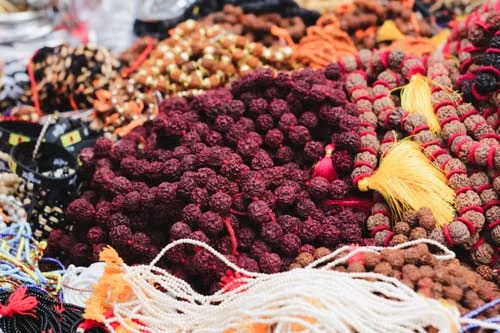
Panchmukhi Rudraksha is the five-faced bead and one of the most widely worn Rudraksha varieties. It also offers a broad range of traditional spiritual benefits. In this guide, we explain what Panchmukhi Rudraksha represents, its traditional benefits, how to check its authenticity, and how to wear and energise it.
What Is Panchmukhi Rudraksha?
Panchmukhi Rudraksha is traditionally associated with Kalagni Rudra, one of the eleven Rudras and a fierce form of Lord Shiva.
The bead has five faces, known as mukhas. Traditionally, these faces represent the five elements, or Panch Tattvas:
- Earth — Prithvi
- Water — Jal
- Fire — Agni
- Air — Vayu
- Space — Akash
The five faces also connect with five aspects of Lord Shiva:
- Sadyojata
- Vamadeva
- Aghora
- Tatpurusha
- Ishana
In traditional astrology, Jupiter (Brihaspati/Guru) governs Panchmukhi Rudraksha. Therefore, practitioners commonly associate it with wisdom, education, health, and spiritual growth.
Unlike some other mukhis, Panchmukhi has a broad traditional appeal. Many practitioners consider it suitable for general spiritual practice and daily wear.
✨ Astro Tip: A Panchmukhi Rudraksha mala usually contains 108 beads plus one Sumeru bead. Practitioners commonly use it for Japa, meditation, Shiva sadhana, and spiritual practice.
Benefits of Panchmukhi Rudraksha
Traditional texts and practices associate Panchmukhi Rudraksha with several areas of wellbeing. However, these benefits belong to spiritual and traditional belief systems rather than established medical science.
Let’s explore the commonly cited benefits.
1. Health and Physical Wellbeing
Traditional practitioners associate Panchmukhi Rudraksha with general wellbeing and balance.
Some traditions also connect it with blood pressure, cardiovascular health, digestion, and the nervous system.
However, Rudraksha should not replace medical treatment. Anyone with a health condition should continue prescribed care and consult a qualified medical professional.
2. Mental Clarity and Concentration
Panchmukhi Rudraksha also has a traditional connection with Jupiter’s qualities of wisdom and knowledge.
Therefore, students and professionals may use it during study, meditation, or mentally demanding work.
Practitioners traditionally believe that the bead can support:
- Concentration
- Memory
- Mental discipline
- Focus
- A calmer approach to work
As a result, many people choose Panchmukhi Rudraksha for everyday spiritual practice.
3. Spiritual Growth and Meditation
Panchmukhi Rudraksha has a strong place in traditional meditation and Japa practices.
Many practitioners use a Panchmukhi mala while repeating Shiva mantras. They believe that the practice can encourage deeper meditation and greater inner calm.
Some traditions also associate Rudraksha with the Ajna Chakra and Sahasrara Chakra.
However, these associations belong to spiritual traditions. Scientific research has not established Rudraksha as a method for activating chakras.
4. Protection and Negative Energy
Indian households have traditionally used Panchmukhi Rudraksha for spiritual protection.
Some families tie the bead around a child’s wrist or wear it around the neck. Traditionally, they use it as a protective spiritual symbol.
The practice may also connect with beliefs about Nazar, or the evil eye.
However, claims about electromagnetic effects or protection from negative energy should not be treated as scientifically proven facts.
5. Freedom From Fear and Anxiety
The traditional association with Kalagni Rudra connects Panchmukhi Rudraksha with courage, transformation, and inner strength.
Therefore, some practitioners wear it during periods of stress, uncertainty, or spiritual searching.
They may find the bead helpful as a reminder to remain calm and grounded.
Nevertheless, anyone experiencing persistent anxiety should seek appropriate professional support. Rudraksha can form part of a spiritual practice, but it should not replace mental-health care.
How to Check if Your Panchmukhi Rudraksha Is Genuine
The popularity of Rudraksha has also created a market for imitation beads. Therefore, buyers should take care when purchasing one.
Here are several traditional checks you may come across.
1. The Water Test
Place the bead in a glass of water.
Some people believe that genuine Rudraksha sinks while plastic or certain artificial beads float.
However, this test cannot conclusively prove authenticity. A bead’s density can vary, and some fake or altered beads may also sink.
Therefore, treat the water test only as an initial observation.
2. The Copper Coin Test
Another traditional method involves placing the bead between two copper coins.
Some practitioners look for a slight rotation. They traditionally attribute this movement to the bead’s natural electromagnetic properties.
However, this method does not provide reliable scientific authentication.
For genuine identification, professional testing provides greater confidence.
3. Count the Mukhas
Panchmukhi Rudraksha should have five clearly defined mukhas.
Look carefully at the bead under good lighting. The lines should run from the top near the stem hole toward the bottom.
Still, simply counting the lines does not guarantee authenticity.
4. Buy From a Trusted Seller
The safest approach involves purchasing from a reputable seller who provides information about the bead’s origin and authenticity.
Nepalese Rudraksha beads tend to be larger and have deeper mukhas. Java or Indonesian Rudraksha beads are often smaller and smoother.
Both varieties can appeal to different preferences and budgets.
🔍 Did You Know?
The word Rudraksha traditionally comes from two Sanskrit terms: Rudra, referring to Shiva, and Aksha, meaning eye.
Together, the name is often interpreted as “Shiva’s eye” or “Shiva’s tears.”
Traditional stories describe Rudraksha trees as growing from Shiva’s tears of compassion after deep meditation.
From the Astrologer’s Desk
We often see people trying to move directly toward rare or high-mukhi Rudraksha beads.
However, beginners do not necessarily need to start with an unusual or expensive bead.
Panchmukhi Rudraksha can provide a simple foundation for spiritual practice. Many practitioners use it regularly for meditation, Japa, or daily wear.
We also meet people who purchase Rudraksha but overlook the traditional energisation process.
According to traditional practice, energisation helps establish intention and devotion before wearing the bead.
Therefore, if you follow the spiritual tradition, take time to prepare your Rudraksha properly.
At the same time, remember that the bead should complement your spiritual practice rather than replace practical action.
How to Wear and Energise Panchmukhi Rudraksha
Traditional practitioners often follow a simple process before wearing Panchmukhi Rudraksha.
Step 1: Prepare the Rudraksha
You can traditionally soak the bead or mala overnight in Panchamrit.
Panchamrit usually contains:
- Milk
- Honey
- Ghee
- Curd
- Sugar
Alternatively, some practitioners prefer clean water with a few drops of Gangajal.
Afterward, clean the bead gently and allow it to dry naturally.
Step 2: Choose an Auspicious Day
Monday is traditionally considered an ideal day for wearing Rudraksha because of its association with Lord Shiva.
However, personal traditions may vary.
If you follow a specific spiritual or astrological practice, you can consult your practitioner for personalised guidance.
Step 3: Prepare Your Space
Take a bath early in the morning.
If your spiritual practice includes Brahmamuhurta, you may choose that time.
Next, sit in a clean prayer space and face east.
Place the Rudraksha on a clean red or yellow cloth.
You may also place a Shiva idol or Shivalinga image nearby.
Step 4: Light a Diya and Incense
Light a ghee diya and incense if these form part of your regular spiritual practice.
Then, focus your attention on Lord Shiva and your intention for wearing the Rudraksha.
Step 5: Chant the Mantras
Traditional Panchmukhi practice commonly includes the Maha Mrityunjaya Mantra.
You may chant it 108 times:
“Om Tryambakam Yajamahe Sugandhim Pushtivardhanam, Urvarukamiva Bandhanan Mrityor Mukshiya Maamritat.”
You can also chant the traditional Panchmukhi Beej Mantra:
“Om Hreem Namah.”
Finally, wear the Rudraksha while chanting:
“Om Namah Shivaya.”
The exact mantra practice can vary between traditions. Therefore, follow the method that aligns with your spiritual path.
How to Maintain Panchmukhi Rudraksha
Proper care can help preserve the bead.
Keep these simple practices in mind:
- Apply a small amount of sesame or sandalwood oil occasionally.
- Avoid prolonged exposure to soap and chemicals.
- Remove the bead before swimming.
- Avoid unnecessary exposure to harsh products.
- Store it in a clean and respectful place.
- Keep it away from sharp objects that could damage the bead.
Some traditions also recommend avoiding contact with other people’s hands.
However, practices differ between families and spiritual lineages. Follow the customs that genuinely align with your beliefs.
Frequently Asked Questions About Panchmukhi Rudraksha
Can Women Wear Panchmukhi Rudraksha?
Yes. Traditional practice does not generally restrict Panchmukhi Rudraksha to men.
Women can wear it as:
- A pendant
- Bracelet
- Mala
- Necklace
Some traditional communities recommend removing Rudraksha during menstruation because of ritual purity practices.
However, modern practitioners may consider this optional. Ultimately, follow the tradition that aligns with your personal beliefs.
How Many Beads Should a Panchmukhi Mala Have?
A traditional Japa mala generally contains 108 beads plus one Sumeru bead.
The Sumeru acts as the head bead. Practitioners traditionally avoid crossing it while chanting.
For general daily wear, people may also choose malas containing 27 or 54 beads.
The choice depends on the purpose and personal preference.
Can Children Wear Panchmukhi Rudraksha?
Panchmukhi Rudraksha is traditionally considered suitable for children.
Parents may choose a small bead as a bracelet or pendant for spiritual protection and concentration.
However, safety comes first.
For very young children, avoid loose beads or long necklaces because they can create a choking or strangulation risk.
Therefore, choose a secure design and supervise young children while they wear it.
Which Is Better: Nepalese or Java Panchmukhi Rudraksha?
Both Nepalese and Java Rudraksha can be genuine.
Nepalese Rudraksha generally has a larger size and deeper mukhas. Many practitioners prefer it for meditation and traditional Sadhana.
Java Rudraksha tends to be smaller and smoother. It can also offer a more affordable option for daily-wear malas.
Therefore, choose according to your purpose, preference, and budget.
Can I Wear Panchmukhi With Other Mukhis or Gemstones?
Traditionally, Panchmukhi Rudraksha can accompany other mukhis.
Some practitioners also combine Rudraksha with gemstones.
However, gemstone combinations may depend on the individual’s birth chart and planetary associations.
Therefore, if you plan to combine several gemstones or high-mukhi Rudraksha beads, personalised astrological guidance may be useful.
Panchmukhi Rudraksha for Daily Spiritual Practice
One reason Panchmukhi Rudraksha remains popular is its simplicity.
You do not need an elaborate routine to begin a spiritual practice.
For example, you can:
- Wear a Panchmukhi bead or mala.
- Spend a few quiet minutes in meditation.
- Chant “Om Namah Shivaya.”
- Practise mindful breathing.
- End your practice with gratitude.
Over time, consistency can become more meaningful than complexity.
Therefore, beginners may find Panchmukhi Rudraksha a comfortable starting point for developing a daily spiritual routine.
Final Thoughts
Panchmukhi Rudraksha holds a special place in traditional Indian spiritual practice.
Its five faces connect it with the Panch Tattvas, Lord Shiva, and Jupiter within traditional belief systems.
People commonly choose it for:
- Meditation
- Japa
- Spiritual growth
- Concentration
- Inner calm
- Traditional protection
- Everyday spiritual practice
However, Rudraksha should not become a replacement for professional medical care, mental-health support, or practical decision-making.
Instead, consider it a spiritual aid that can complement your personal practice.
Whether you are completely new to Rudraksha or already familiar with different mukhis, Panchmukhi offers a simple place to begin.