
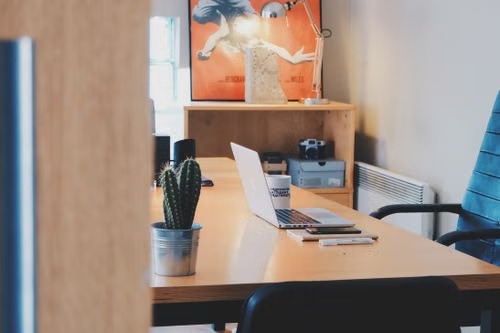
Your workspace shapes far more than productivity. According to Vastu Shastra, it shapes your career momentum too. Good Office Vastu starts with something simple: which direction you face while working. But it extends further — into desk placement, colour choices, and even where you keep your files. Whether you run a home office or manage a corner cubicle, these principles adapt to almost any workspace.
Why Office Vastu Matters for Career Growth
Vastu Shastra treats the workspace as an extension of your personal energy field. A well-aligned office supports clarity, decision-making, and steady financial growth. A poorly aligned one can contribute to stress, stalled projects, or workplace friction, according to Vastu principles. Most professionals spend eight or more hours a day at their desks. Small adjustments compound significantly over that much time.
The Best Direction for Your Office
Vastu recommends placing your office in the north, east, or northeast zone of the building. These directions align with growth, wisdom, and opportunity. If you’re setting up a home office, choose a room in one of these zones. Try to avoid the south or southwest, which Vastu tradition associates with heavier, more stagnant energy.
Which Way Should You Face While Working?
Within the room itself, direction matters just as much as the room’s overall placement. Position your desk so you face east or north while seated. Facing east supports new ideas, confidence, and mental clarity. Facing north supports better cash flow and career opportunities, since Vastu tradition links this direction to Kubera, the deity of wealth.
Try not to face south or west while working. Vastu tradition believes these directions drain energy and cause fatigue over long work sessions.
Desk Placement Within the Room
Where you place your desk inside the office matters as much as which way you face.
Back support: Position your desk against a solid wall, ideally in the southwest corner. This gives your back support while you work. Sitting with your back to a door or window, without a wall behind you, creates a subtle sense of vulnerability and distraction, according to Vastu tradition.
Avoid sitting under a beam: Does your office have exposed ceiling beams? Avoid placing your desk directly beneath one. Vastu tradition considers this placement a source of pressure and stress, whether or not you consciously notice the beam overhead.
Keep the entrance visible: Arrange your desk so you can see the office door without turning around completely, whenever possible. This positioning supports a sense of awareness and control, both practically and energetically.
Distance from the door: Avoid placing your desk directly in line with the entrance. Vastu tradition believes this exposes you to a direct rush of unfiltered energy every time someone enters.
Where to Place Important Office Items
Several other elements affect the overall energy of your workspace beyond the desk itself.
Computer and important files: Keep your computer and important documents in the southeast corner of your desk or office. This direction relates to sharp thinking and technological clarity in Vastu tradition.
Cash box or drawer: Do you handle cash or valuables at your desk? Store them in the north direction, ideally in a drawer that locks. This aligns with Kubera’s wealth-supporting energy.
Bookshelf and storage: Heavy furniture like bookshelves, cabinets, and storage units belongs on the south or west walls of the office. These directions support stability, so they can comfortably bear visual and physical weight.
Visitor or client seating: Do clients or colleagues sit across from you? Position their chairs so they face north or east too. Give them a wall behind them rather than a window, mirroring the same support principle that applies to your own seat.
Colours That Support Office Vastu
Colour choices in the workplace influence focus, energy, and mood just as much as they do at home.
Recommended colours: Light greens, soft blues, whites, and light yellows work well for most offices. These shades support calm focus and mental clarity without overstimulating the space.
Colours to use sparingly: Reserve red, black, and very dark shades for small accents only. Large amounts of these colours create excess intensity or heaviness in a workspace meant for sustained concentration, according to Vastu tradition.
Colours to avoid: Skip very dark, dull colours across large wall surfaces. Vastu tradition associates these tones with sluggish energy and reduced motivation over time.
Lighting and Plants for a Balanced Workspace
Natural light plays a significant role in Office Vastu. Position your desk to receive natural light from the east, whenever your layout allows. Morning light energises the mind and supports fresh thinking, according to Vastu principles. If natural light is limited, bright, warm artificial lighting achieves a similar supportive effect.
Adding a small plant to your desk works well too. Money plant, bamboo, or a small potted succulent are popular Vastu-friendly choices, since Vastu tradition associates these plants with growth and prosperity. Avoid thorny plants like cacti near your workspace, though. Vastu tradition links them to tension and obstacles rather than growth.
Vastu Tips for Home Offices Specifically
Home offices come with unique challenges, since they often share space with other household functions. If you work from a spare room, keep that room dedicated to work only. Avoid mixing it with storage or a guest bed, since mixed-use spaces tend to carry unfocused, scattered energy.
Does your home office sit within your bedroom due to space constraints? Use a room divider, or place your desk at a reasonable distance from the bed instead. This separation helps distinguish “work energy” from “rest energy,” even within a single room. Additionally, avoid setting up your workspace directly facing your bed. Vastu tradition considers this arrangement disruptive to both productivity and sleep quality.
Quick Office Vastu Checklist
- Locate your office in the north, east, or northeast zone
- Face east or north while working
- Sit with a solid wall behind you, ideally in the southwest
- Avoid sitting directly under a beam or in line with the door
- Keep computers and files in the southeast
- Store cash or valuables in the north
- Place heavy storage in the south or west
- Choose calm colours like light green, blue, or white
- Add natural light and a small, non-thorny plant
Frequently Asked Questions
What if my desk already faces south, and I can’t change my seating due to office rules? Small remedies help offset the imbalance when you can’t change your facing direction. Try placing a small mirror on your desk that reflects your workspace toward the north or east. Keeping a compact plant nearby also helps soften the energy. Even minor adjustments, like decluttering your desk regularly, make a meaningful difference when the ideal direction isn’t available.
Does Office Vastu apply to shared workspaces or co-working offices? Yes, though you’ll have less control over the room’s overall direction. Focus on what you can adjust instead — your seating position within your allotted desk space, keeping your immediate area clutter-free, and adding a small plant or personal item that supports positive energy, even in a shared environment.
Can Vastu remedies help if I’m stuck in a job with no growth despite good direction and layout? Vastu addresses the environmental energy around you. Career growth, however, also depends on your birth chart’s planetary periods (Dasha) and transits. Is your Office Vastu already well-aligned but you’re still facing stagnation? A personalised astrological consultation can identify whether a specific planetary period is contributing to the delay.
Is it necessary to redesign my entire office, or can small changes make a difference? Small changes often make a meaningful difference on their own. Adjusting your desk’s facing direction, decluttering your workspace, and making minor colour additions — like a yellow desk organiser or green plant — can shift the energy considerably. A full office redesign isn’t required.
Does Office Vastu differ for different professions, like creative work versus finance? The core directional principles stay the same across professions. Some professionals do add specific elements based on their field, though. Those in creative fields sometimes emphasise the northeast for inspiration, while those in finance-related roles pay particular attention to the north for wealth-related energy. An astrologer can offer profession-specific refinements during a personalised consultation.