
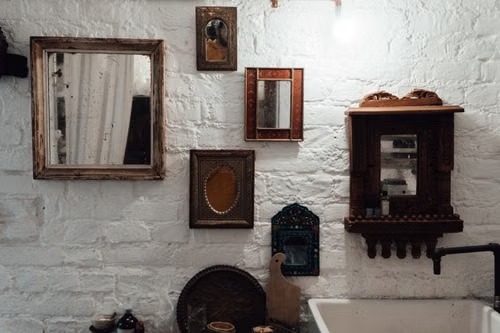
What Is Mirror Vastu?
Mirror Vastu refers to the traditional Vastu Shastra principles used to guide the placement of mirrors and other reflective surfaces in a home. Mirrors are not only useful for everyday grooming; they can also make a room appear brighter, larger, and more open. According to Vastu traditions, however, their position and the direction in which they are placed are considered important because mirrors are believed to reflect and amplify the energy of the spaces around them. (Architectural Digest)
This is why simply hanging a mirror wherever there is an empty wall may not be ideal if you want to follow Vastu principles.
The good news is that you do not need to redesign your entire home. By understanding a few basic mirror Vastu guidelines, you can make more mindful choices about where to place mirrors in your living room, bedroom, dining area, bathroom, entrance, and other spaces.
Note: Vastu Shastra is a traditional belief system rather than a scientifically established method for predicting or controlling outcomes. The recommendations below are presented as traditional Vastu guidance.
Which Direction Is Best for a Mirror According to Vastu?
The north and east directions are commonly considered the most favourable directions for mirrors. Traditional Vastu guidance associates the north with prosperity and the east with sunlight, vitality, and new beginnings. A mirror placed on these walls is therefore believed to enhance positive qualities associated with the space. (Architectural Digest)
North Direction
The north is traditionally associated with wealth and prosperity. Therefore, placing a mirror on a north-facing wall is often recommended when homeowners want to symbolically encourage financial growth and abundance.
East Direction
The east is associated with the rising Sun, vitality, growth, and fresh energy. A mirror on an eastern wall can also reflect natural light and make a room feel brighter.
What About South and West?
Many contemporary Vastu guides recommend avoiding mirrors on south or southwest walls, particularly when there are other suitable placement options. However, Vastu recommendations can differ between traditions and individual practitioners, so room layout and the specific purpose of the mirror should also be considered. (Architectural Digest)
Mirror Vastu for the Living Room
The living room is one of the easiest places to incorporate a mirror because it is generally a social and well-lit area.
According to common mirror Vastu recommendations, the north or east wall is a preferred location. (Architectural Digest)
A mirror can also make a compact living room appear more spacious. From an interior-design perspective, placing it where it reflects daylight, greenery, or an attractive part of the room can create a sense of depth.
Best Living Room Mirror Placement
Consider placing a mirror:
- On the north wall
- On the east wall
- Opposite a window if the reflection is pleasant
- Above a console table
- Where it reflects plants, artwork, or natural light
What Should the Mirror Reflect?
This is an important mirror Vastu consideration.
If you follow the traditional belief that mirrors amplify what they reflect, choose something visually positive. A clean room, indoor plant, attractive artwork, or natural light can create a pleasant reflection.
Avoid positioning the mirror so that it prominently reflects:
- Clutter
- Dustbins
- Broken furniture
- Messy shelves
- Dark or neglected corners
The practical benefit is equally straightforward: mirrors visually repeat whatever is in front of them, so reflecting clutter can make a room feel even busier.
Mirror Vastu for the Bedroom
The bedroom requires greater care.
Many Vastu traditions advise avoiding a mirror that directly reflects the bed. Contemporary Vastu sources associate this placement with restlessness or disturbed sleep. (Architectural Digest)
From a practical perspective, there is also a simple reason to reconsider this placement: reflections, movement, or light from a mirror can be distracting when you are trying to sleep.
Where Should You Place a Bedroom Mirror?
If you need a mirror in your bedroom, consider:
- A north or east wall
- Inside a wardrobe door
- On a dressing unit positioned away from the bed’s direct reflection
- A location where the bed is not visible in the mirror
A wardrobe mirror is particularly convenient because you can close the door when the mirror is not being used.
Avoid a Mirror Facing the Bed
This is one of the most frequently repeated mirror Vastu rules.
If your existing mirror faces your bed, you do not necessarily need to remove the entire dressing unit. You can reposition the mirror, change the wardrobe configuration, or cover the reflective surface at night.
Is a Mirror Opposite the Main Door Good According to Vastu?
A mirror directly opposite the main entrance is generally discouraged in popular Vastu practice. The traditional reasoning is that the mirror may reflect incoming energy back toward the entrance instead of allowing it to move into the home. (VedicBirth)
Better Alternative
If you want a mirror near your entrance, place it on a side wall rather than directly opposite the main door.
This also happens to be practical: a side-wall mirror allows you to check your appearance before leaving without making the entrance feel visually cramped.
A Simple Rule to Remember
- Mirror beside the entrance = generally preferred.
- Mirror directly facing the entrance = generally avoided in Vastu tradition.
Mirror Vastu for the Dining Room
The dining area is another popular location for mirrors.
A mirror positioned so that it reflects the dining table is traditionally associated with abundance and prosperity, based on the idea that a mirror symbolically doubles what it reflects. Contemporary Vastu guides commonly recommend north or east walls for dining-room mirrors. (VedicBirth)
For example, if the mirror reflects a beautifully arranged dining table, flowers, or a well-maintained dining space, the reflection can enhance the room visually while fitting the traditional Vastu symbolism.
Dining Room Tips
- Prefer north or east walls where possible.
- Keep the mirror clean.
- Let it reflect the dining table or an attractive area.
- Avoid reflecting clutter or a messy kitchen.
- Make sure the mirror does not create uncomfortable glare during meals.
Mirror Vastu for the Bathroom
Mirrors are naturally common in bathrooms, especially above the washbasin.
From a Vastu perspective, many contemporary guides recommend placing bathroom mirrors on the north or east wall, where possible. (Housing)
Practical Bathroom Mirror Tips
Regardless of Vastu, pay attention to:
- Adequate lighting
- Moisture-resistant frames
- Clear visibility
- Proper ventilation
- Secure wall mounting
Avoid damaged or heavily oxidised mirrors. A clean, well-maintained mirror contributes to a more pleasant bathroom environment.
Should You Put a Mirror in the Kitchen?
Kitchen mirror placement requires extra caution if you are following Vastu.
The kitchen is traditionally associated with the fire element, particularly around the stove. Some Vastu practitioners therefore advise avoiding mirrors that reflect the cooking area or stove because reflective surfaces are traditionally associated with water or reflective energy. (MagicBricks)
If You Need a Mirror in the Kitchen
If a mirror is necessary for practical or decorative reasons:
- Avoid placing it directly opposite the stove.
- Avoid reflecting flames or the cooking area.
- Keep the mirror away from areas where grease and smoke accumulate.
- Prefer a location that reflects a clean, organised part of the room.
In many cases, simply avoiding unnecessary mirrors in the kitchen is the easiest approach.
Mirror Vastu for the Pooja Room
Many Vastu practitioners recommend keeping mirrors out of the pooja room, particularly when the mirror creates distracting or multiple reflections of the sacred space.
If you want a reflective decorative element, consider using it elsewhere in the home instead.
The goal is to maintain the pooja area as a calm, uncluttered space dedicated to prayer and meditation.
Mirror Vastu for the Study Room
A study room should encourage concentration, clarity, and a distraction-free environment.
For this reason, avoid placing a large mirror where it constantly reflects your face, movement, or the activity behind your desk.
Some contemporary Vastu guides specifically advise against a study mirror facing the desk. (VedicBirth)
Better Options
If you want a mirror in a study:
- Keep it on a side wall.
- Avoid reflecting the desk directly.
- Choose a smaller decorative mirror.
- Make sure it does not create glare on a computer screen.
Can Mirrors Be Placed in a Narrow Hallway?
Yes. A hallway can actually be an excellent place for a mirror from an interior-design perspective because mirrors can visually widen narrow spaces and bounce light through darker corridors.
If you also want to follow Vastu, choose a suitable wall direction where possible and make sure the mirror does not directly face the main entrance.
Avoid placing a mirror at the end of a dark hallway if it reflects an unattractive or cluttered area.
Mirror Vastu: Does the Shape of the Mirror Matter?
Different Vastu traditions have different recommendations regarding mirror shapes, so there is no single universally accepted rule.
However, square and rectangular mirrors are frequently recommended for their balanced and structured appearance. Some Vastu sources also recommend round or wave-shaped mirrors in particular directions. (Housing)
A Practical Approach
Choose a shape that:
- Fits the room’s proportions.
- Is securely installed.
- Does not create uncomfortable reflections.
- Complements the surrounding furniture.
- Works with your preferred Vastu guidelines.
You do not have to sacrifice your interior style simply to follow one rigid rule.
Should Mirrors Be Large or Small?
The size of a mirror should primarily depend on the room, wall, furniture, and purpose.
A large mirror can make a small room feel more spacious, while a smaller mirror may work better above a compact console or dressing table.
Instead of focusing only on size, make sure the mirror does not overwhelm the wall or create excessive visual clutter.
For everyday use, many interior-design guides recommend positioning the mirror so that the reflection is comfortable and practical rather than placing it unusually high or low. (Akway)
Why Broken Mirrors Are Avoided in Mirror Vastu
One of the simplest mirror Vastu rules is to avoid keeping broken, cracked, chipped, or heavily damaged mirrors in the home.
Traditionally, damaged reflective surfaces are considered undesirable because they create fragmented or distorted reflections. Practically, cracked glass can also be a safety hazard.
Therefore:
Broken mirror → repair or replace it.
You don’t need to keep a damaged mirror simply because it has sentimental value.
Keep Mirrors Clean and Clear
A dirty mirror does more than make a room look untidy. It also creates a dull and distorted reflection.
If you’re following Vastu, keeping reflective surfaces clean is especially important because of the traditional belief that mirrors reflect and amplify what they encounter.
Make mirror cleaning part of your regular home-maintenance routine.
A Clean Mirror Should:
- Have a clear reflection
- Be free from cracks
- Have no major stains
- Have a secure frame
- Not be covered in dust
What Should a Mirror Reflect?
This may be one of the most useful rules to remember.
Instead of thinking only about where you place your mirror, consider what it reflects.
Positive Things to Reflect
- Natural light
- Green plants
- Flowers
- Beautiful artwork
- A clean dining table
- Open space
- Attractive architectural features
Things Better Not Reflected
- Dustbins
- Clutter
- Broken objects
- Unorganised storage
- Dark corners
- Toilets
- Messy kitchen areas
This principle works both within traditional Vastu thinking and modern interior design: a mirror visually duplicates whatever it reflects.
Mirror Vastu Dos and Don’ts
Do’s
- Place mirrors on north or east walls where appropriate.
- Keep mirrors clean and undamaged.
- Use mirrors to increase the feeling of space and light.
- Place bedroom mirrors where they do not reflect the bed.
- Consider a side-wall mirror near the entrance.
- Let mirrors reflect attractive and well-maintained spaces.
- Use wardrobe mirrors when bedroom space is limited.
- Secure large mirrors properly.
Don’ts
- Don’t place a mirror directly opposite the main entrance if following traditional Vastu.
- Don’t position a bedroom mirror so it directly reflects the bed.
- Don’t keep broken or cracked mirrors.
- Don’t allow mirrors to reflect clutter.
- Don’t place a kitchen mirror directly opposite the stove.
- Don’t use mirrors in a way that creates uncomfortable glare.
- Don’t overcrowd a room with too many reflective surfaces.
What If Your Mirror Is Already in the Wrong Place?
Don’t panic.
Vastu is meant to help you make mindful choices about your living environment, not create unnecessary anxiety.
If moving the mirror is possible, reposition it to a more suitable wall.
If moving it isn’t practical, consider simple alternatives.
Simple Mirror Vastu Remedies
1. Cover the mirror at night
If your bedroom mirror faces the bed, covering it with a curtain or fabric panel when sleeping is a commonly suggested remedy.
2. Change its angle
Sometimes a small adjustment can prevent the bed or entrance from being directly reflected.
3. Move it to a side wall
A side wall can often solve entrance-related placement issues without requiring a new mirror.
4. Replace a damaged mirror
If the mirror is cracked, replacing it is preferable to keeping it.
5. Change what it reflects
If moving the mirror is impossible, rearrange the furniture or décor in front of it so that it reflects a cleaner and more pleasant part of the room.
Quick Mirror Vastu Guide for Every Room
| Room | Preferred Placement | Avoid |
|---|---|---|
| Living Room | North or east wall | Cluttered reflections |
| Bedroom | North/east, away from bed reflection | Mirror facing bed |
| Dining Room | North/east, reflecting dining area | Messy reflections |
| Bathroom | North/east where practical | Damaged or poorly maintained mirrors |
| Entrance | Side wall | Directly opposite main door |
| Kitchen | Keep mirrors minimal; if needed, choose carefully | Facing stove |
| Study | Side wall | Facing desk |
| Pooja Room | Generally avoid | Distracting reflections |
These are common contemporary Vastu recommendations, and specific traditions may differ. (VedicBirth)
A Simple Rule for Mirror Vastu
If you don’t want to remember every rule, remember these five principles:
1. Choose the Direction Carefully
North and east are commonly preferred.
2. Watch the Reflection
A mirror visually doubles whatever is in front of it.
3. Don’t Reflect the Bed
This is one of the most common bedroom Vastu recommendations.
4. Don’t Reflect the Main Entrance Directly
Use a side wall instead.
5. Keep the Mirror Clean and Undamaged
A clear mirror creates a cleaner visual environment.
Frequently Asked Questions About Mirror Vastu
Which direction is best for a mirror according to Vastu?
The north and east directions are commonly considered the most favourable for mirrors. North is traditionally associated with prosperity, while east is associated with sunlight, growth, and vitality. (Architectural Digest)
Can a mirror face the main door?
According to common mirror Vastu guidelines, it is better to avoid placing a mirror directly opposite the main door. A mirror on a side wall is generally preferred. (VedicBirth)
Can I keep a mirror in my bedroom?
Yes, but traditional Vastu guidance generally recommends avoiding a mirror that directly reflects the bed. A wardrobe-door mirror or a mirror on a side wall can be a practical alternative. (DesignCafe)
Is a mirror facing the bed bad according to Vastu?
Many Vastu traditions consider a mirror directly facing the bed undesirable because it is believed to disturb the restful quality of the bedroom. If you cannot move it, covering the mirror while sleeping is a commonly suggested solution. (Architectural Digest)
Can I put a mirror in the dining room?
Yes. A mirror in the dining area is commonly considered suitable, particularly when it reflects the dining table. Traditional Vastu interpretations associate this with abundance and prosperity. (Architectural Digest)
Can mirrors be placed in the kitchen?
Mirrors in kitchens are best used cautiously if you’re following Vastu. Avoid placing one directly opposite the stove or in a position where it prominently reflects fire and cooking activity. (ASBL Real Estate Developers)
Are round mirrors good according to Vastu?
Vastu recommendations for mirror shapes vary. Square and rectangular mirrors are commonly suggested, while some traditions recommend round or other shapes depending on the direction. The overall placement and reflection should also be considered. (Housing)
What should a mirror reflect according to Vastu?
Traditionally, mirrors are best positioned to reflect positive, clean, attractive elements such as plants, natural light, artwork, or an organised part of the room. Avoid reflecting clutter, damaged objects, or neglected spaces.
What should I do with a broken mirror?
Replace a cracked or broken mirror rather than keeping it in use. Apart from traditional Vastu concerns, damaged glass can pose a practical safety risk.
Final Thoughts on Mirror Vastu
Mirror Vastu is not simply about choosing a direction and hanging a mirror on the wall. The more useful approach is to consider three things together: direction, reflection, and purpose.
North and east are commonly preferred directions, while bedroom mirrors facing the bed and mirrors directly opposite the main entrance are generally avoided in traditional Vastu practice. At the same time, practical interior-design considerations matter too. A mirror should improve the room rather than create glare, clutter, or visual discomfort.
Most importantly, your home should feel comfortable and welcoming. Use Vastu as a framework for making thoughtful choices, while combining it with practical interior design, safety, lighting, and your own personal style.