
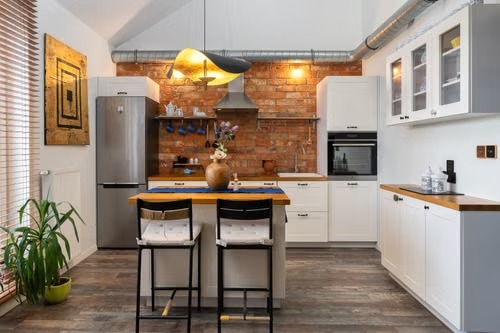
Kitchen Vastu focuses on the traditional placement of the kitchen, cooking area, stove, colours, and other elements within the home. According to Vastu Shastra, the kitchen represents the fire element, so its location and arrangement receive special attention.
Traditionally, the southeast direction is considered the preferred location for a kitchen because it is associated with the fire element. However, the exact layout of a home can vary, so practical factors such as ventilation, safety, plumbing, and accessibility should also guide your decisions.
In this guide, we will look at Kitchen Vastu for stove placement, colours, directions, storage, and common mistakes.
Best Direction for a Kitchen According to Vastu
The southeast direction is traditionally considered the most suitable location for a kitchen.
This direction is associated with Agni, the fire principle in Vastu traditions. As a result, many Vastu guidelines recommend placing the kitchen in the southeast part of the home.
The northwest is often considered another suitable option when a southeast kitchen is not possible.
However, every home has a different floor plan. Therefore, you should not make major structural changes based only on a general Vastu rule.
Kitchen Vastu for Stove Placement
The stove is one of the most important elements in Kitchen Vastu because it represents the fire element.
Traditionally, Vastu recommends placing the cooking stove toward the southeast portion of the kitchen.
Which Direction Should You Face While Cooking?
According to traditional Vastu guidelines, facing east while cooking is generally considered favourable.
If your kitchen layout allows it, position the stove so that the person cooking naturally faces east.
A practical layout is more important than forcing the stove into an uncomfortable position. Make sure there is enough counter space around the stove and that cooking remains safe and convenient.
Keep the Stove Away From the Sink
Vastu traditions generally recommend keeping the stove and sink separated.
The reason comes from the traditional association of fire and water as opposing elements.
From a practical perspective, separation also makes sense. Water splashing around a hot stove can create safety concerns.
Therefore, leave a reasonable amount of counter space between these areas whenever your kitchen allows it.
Kitchen Vastu for Different Directions
Not every home can have a southeast kitchen. If your kitchen is already located elsewhere, you can focus on improving its internal arrangement.
Southeast Kitchen
The southeast is traditionally considered the preferred kitchen direction.
If your kitchen occupies this area, place the stove toward the southeast portion and maintain good ventilation.
Northwest Kitchen
The northwest is commonly considered the next suitable option in traditional Vastu guidelines.
In this case, you can still pay attention to stove placement and the direction you face while cooking.
Northeast Kitchen
The northeast is generally treated with special importance in Vastu and is traditionally associated with water and spiritual qualities.
For this reason, many Vastu guidelines advise against placing the main kitchen in the northeast.
However, if your existing home has a northeast kitchen, do not panic. You can focus on practical organisation, ventilation, cleanliness, and safe cooking practices rather than making expensive structural changes.
Best Kitchen Colours According to Vastu
Colours can influence the visual atmosphere of a room. In Vastu traditions, certain shades are commonly recommended for kitchens because they are associated with warmth and the fire element.
Recommended Kitchen Colours
Consider shades such as:
- Light orange
- Peach
- Soft red
- Pink
- Beige
- Cream
- Light yellow
- Earthy tones
These colours can also create a warm and welcoming appearance.
However, you do not need to make the entire kitchen bright red or orange. Small accents can achieve a similar visual effect while keeping the space comfortable.
Colours to Use Carefully
Very dark shades may make a small kitchen feel heavier or less spacious.
If you prefer dark cabinets or countertops, balance them with sufficient lighting and lighter surrounding surfaces.
Ultimately, colour choices should combine traditional preferences with your personal style and the size of the kitchen.
Kitchen Vastu for Cabinets and Storage
Good storage plays an important role in creating an organised kitchen.
Traditional Vastu guidelines often recommend heavier storage units toward the south, west, or southwest areas of the kitchen.
Lighter storage can occupy other areas depending on the floor plan.
Keep the Kitchen Organised
Avoid allowing unused utensils, broken appliances, and expired food to accumulate.
An organised kitchen can make cooking easier and reduce visual clutter.
For example, keep frequently used items within easy reach while storing less-used equipment in cabinets.
This approach supports both practical kitchen design and traditional Vastu principles.
Kitchen Vastu for Sink and Water Elements
The sink represents the water element, which traditionally differs from the fire element represented by the stove.
Therefore, Vastu guidelines generally recommend keeping these two elements separate.
If possible, avoid placing the stove and sink directly next to each other.
You can also maintain a small counter or preparation area between them. This creates a natural separation without requiring major changes to the kitchen.
Kitchen Vastu for Windows and Ventilation
Ventilation is essential in any kitchen.
Cooking produces heat, steam, smoke, and odours. Proper airflow helps remove them and keeps the kitchen more comfortable.
From a traditional Vastu perspective, windows and ventilation openings may receive directional recommendations. However, practical airflow should remain the priority.
Whenever possible, provide adequate ventilation through windows, exhaust fans, or other suitable systems.
Natural light can also make the kitchen feel brighter and more pleasant during the day.
Common Kitchen Vastu Mistakes to Avoid
Many Kitchen Vastu problems come from simple layout or organisation issues.
1. Placing the Stove in an Uncomfortable Location
Do not force a stove into a position that makes cooking difficult.
Leave enough space for movement and keep flammable materials away from heat sources.
2. Keeping the Stove and Sink Directly Together
Traditional Vastu recommends separating fire and water elements.
From a safety perspective, keeping water away from a hot cooking surface also makes sense.
3. Ignoring Ventilation
A kitchen without proper airflow can quickly become hot and uncomfortable.
Use windows, exhaust fans, or suitable ventilation systems to remove smoke and excess heat.
4. Allowing Clutter to Build Up
Broken appliances, unused containers, and excessive items can make the kitchen difficult to use.
Instead, organise your cabinets regularly and remove things you no longer need.
5. Using Too Many Dark Colours
Dark colours are not automatically harmful. However, using them throughout a small kitchen can make the space feel visually heavy.
Balance darker surfaces with lighter walls, natural light, or suitable artificial lighting.
6. Ignoring Kitchen Safety
Vastu should never override basic safety.
Keep electrical appliances away from water. Store flammable items safely and maintain clear pathways around the cooking area.
7. Making Expensive Changes Without Checking the Layout
One of the biggest mistakes is changing a kitchen solely because of a general Vastu recommendation.
Before moving plumbing, gas lines, electrical connections, or major appliances, consider the cost and practical consequences.
A comfortable and safe kitchen should remain the priority.
Kitchen Vastu Tips for Apartments
Apartment kitchens often have limited space, which makes traditional layouts harder to follow.
Fortunately, you can still apply simple principles.
Start by keeping the cooking area clean and organised. Next, position the stove in the most practical location available while considering traditional directional guidance.
Also, maintain separation between the stove and sink whenever possible.
Good lighting and ventilation can make an even bigger difference in a compact kitchen.
Most importantly, avoid making major structural changes just to follow a general Vastu rule.
Kitchen Vastu for a Small Kitchen
Small kitchens require careful use of space.
Choose compact storage solutions and keep the countertops as clear as possible.
If your stove, sink, and refrigerator sit close together, create separation through counter space or careful organisation where possible.
Use lighter colours if you want the kitchen to appear more spacious.
Additionally, install adequate lighting so that food preparation and cooking remain comfortable and safe.
Does Kitchen Vastu Really Affect Your Life?
Vastu Shastra is a traditional Indian system of architecture and spatial planning. Its recommendations are based on traditional concepts involving directions, elements, and energy.
However, there is limited scientific evidence that following Vastu rules directly changes wealth, health, relationships, or other life outcomes.
Therefore, it is better to approach Kitchen Vastu as a traditional design framework rather than a guaranteed method for creating specific results.
Practical factors such as cleanliness, ventilation, lighting, ergonomics, food hygiene, and fire safety have clear importance in a kitchen.
How to Create a Vastu-Friendly Kitchen
You do not need to completely redesign your kitchen to follow traditional Vastu principles.
Start with these simple steps:
- Keep the kitchen clean and organised.
- Place the stove in the southeast area when practical.
- Face east while cooking if your layout allows it.
- Keep the stove and sink separated.
- Maintain good ventilation.
- Use comfortable and balanced colours.
- Store heavier items toward the south or west where practical.
- Remove broken or unused appliances.
- Keep electrical appliances away from water.
- Never compromise kitchen safety for Vastu.
These simple changes can make your kitchen more comfortable while incorporating traditional Vastu ideas.
Kitchen Vastu: The Bottom Line
Kitchen Vastu traditionally places special importance on the fire element, stove placement, direction, colours, and separation between fire and water.
The southeast is generally considered the preferred kitchen direction, while the northwest is often suggested as an alternative.
For the stove, traditional guidance commonly recommends the southeast portion of the kitchen and facing east while cooking.
Nevertheless, Vastu should work alongside practical design rather than replace it.
A well-ventilated, clean, organised, and safe kitchen will always be more useful than a perfectly positioned kitchen that is uncomfortable to use.
Frequently Asked Questions
Which direction is best for a kitchen according to Vastu?
The southeast is traditionally considered the preferred direction for a kitchen because of its association with the fire element. The northwest is often considered another suitable option.
Which direction should the stove face?
Traditional Kitchen Vastu commonly recommends positioning the stove so that the person cooking faces east.
Can the kitchen be in the northeast?
Many Vastu traditions advise against placing the main kitchen in the northeast. However, if your existing kitchen is already there, you do not necessarily need to undertake expensive structural changes.
Where should the stove be placed in the kitchen?
According to traditional Vastu, the southeast portion of the kitchen is generally preferred for the stove. Practical safety and the existing layout should also guide the final placement.
Which colours are best for a Vastu kitchen?
Light orange, peach, soft red, pink, beige, cream, and light yellow are commonly recommended in traditional Vastu guidelines.
Can the stove and sink be next to each other?
Traditional Vastu recommends separating the stove and sink because they represent fire and water. From a practical perspective, separation can also reduce the risk of water coming into contact with a hot cooking surface.
Is Vastu scientifically proven?
Vastu Shastra is a traditional architectural and spatial-planning system. There is limited scientific evidence showing that Vastu placement directly determines outcomes such as wealth, health, or relationships.
Should I renovate my kitchen because of Vastu?
Not necessarily. Before making expensive changes, consider safety, ventilation, plumbing, electrical connections, accessibility, and your overall budget. Traditional Vastu principles can be incorporated where practical.